

What is Jaw Aesthetics?
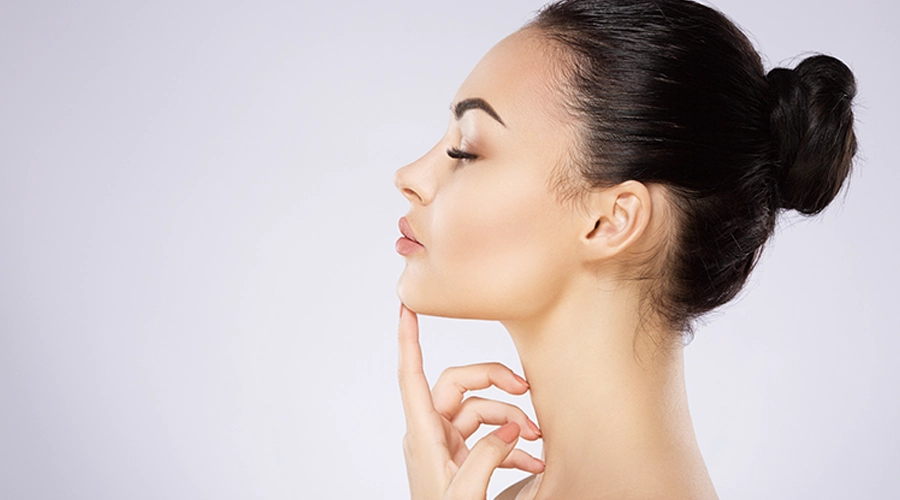
Chin reshaping is a general term for aesthetic procedures aimed at reshaping the chin, its size, and its proportions to other parts of the face. Chin reshaping, which can be performed surgically or, in appropriate cases, non-surgically, aims to create a more balanced facial profile and lower face contour.
A receding chin, an overly prominent chin, an asymmetrical structure, or a disproportionate fit with the lower facial proportions are all reasons for aesthetic evaluation. However, the appearance of the chin is not solely determined by bone structure; skin, fat, and muscle tissues also influence the result.
Surgical options include jaw implants and genioplasty, which involves repositioning the jawbone. For more limited volume changes, filler injections may be considered.
The goal is not to give everyone the same jaw shape. The aim is to create a proportionate appearance while preserving the individual’s natural facial anatomy.
Why is jaw aesthetic surgery performed?
A chin that appears disproportionate to other parts of the face, or has noticeable shape differences, may necessitate aesthetic adjustments. In these cases, Chin Aesthetics may be planned to change the projection, height, or contour of the chin.
A receding chin can make the nose and lips appear more prominent in profile. Conversely, a chin that is too prominent or too long can affect the proportions of the lower face.
Chin asymmetry and noticeable contour irregularities are also among the reasons for evaluation. However, the source of these differences may not be solely the chin tip.
Malocclusion between the upper and lower jawbones falls under a different treatment area. In such cases, aesthetic chin tip procedures alone may not be sufficient; orthodontic or orthognathic evaluation may be necessary.
Who is a suitable candidate for chin aesthetics surgery?
Individuals who are dissatisfied with the position, shape, or relationship of their chin to their facial proportions may be considered for the procedure. In individuals with suitable general health and sufficiently developed facial features, Chin Aesthetics can be planned according to anatomical needs.
In evaluating candidates, the structure of the jawbone, bite, lower facial height, and soft tissue thickness are important factors. The method should not be chosen based solely on external appearance.
A receding chin can sometimes be associated with a completely recessed lower jaw. These two conditions require different treatment approaches.
When considering surgery, medications used, smoking habits, dental and gum health, and overall health status should be evaluated. Realistic expectations are also an important part of selecting the right candidate.
How does jaw shape affect facial proportions?
Chin shape affects the length, width, and profile of the lower part of the face. Therefore, in chin aesthetics planning, not only the size of the chin tip but also its relationship with the forehead, nose, lips, and jawline is evaluated.
A receding chin can make the lower face appear shorter or thinner. Conversely, an overly long or prominent chin can make the lower part of the face appear more dominant than it is.
Jaw width also affects the frontal view. However, the width of the chin tip and the width of the lower jaw corners are not the same anatomical features.
There is no single ideal measure for evaluating facial proportions. Bone structure, gender-related anatomical differences, and individual facial features must all be considered together.
What is the importance of the chin in facial profile?
The chin, along with the nose and lips, forms the basic contours of the facial profile. Therefore, Chin Aesthetics takes into account the overall profile balance of the face when evaluating the position of the chin, whether it is positioned forward or backward.
A receding chin can make the nose appear larger or more prominent than it is. Conversely, a well-defined chin projection can give the lower face a stronger appearance.
However, a profile isn’t solely comprised of the chin. The entire lower jawbone, the bite of the teeth, and the position of the lips also influence the appearance.
During surgical planning, the extent to which the chin will be advanced or retracted should be determined according to the individual’s anatomy. Excessive alteration can disrupt natural facial proportions.
How is a facial analysis performed before jaw aesthetic surgery?
Pre-operative facial analysis is performed to determine the current position of the chin and its relationship with other facial structures. In chin aesthetics planning, the appearance of the face from the front, side, and various other angles is evaluated.
The width, height, projection, and position of the chin relative to the mid-face are examined. The proportions between the nose, lips, and jawline are also included in the assessment.
Tooth positioning and mandibular movement are important. In individuals with significant malocclusion, simply changing the appearance of the chin may not be sufficient.
Photographic analysis and radiological imaging may be used when necessary. However, the need for imaging is determined according to the type of procedure planned. The aim is to align aesthetic expectations with the existing anatomical conditions.
Why is Profile Analysis Important in Chin Aesthetics?
Profile analysis helps to assess the visual balance created by the chin with the nose, lips, and forehead. Therefore, in chin aesthetics planning, not only the frontal view of the chin but also its lateral projection is examined.
A receding chin can make the lower part of the face appear thinner. Conversely, a prominent chin can create disproportionate lip and nose proportions.
However, the position of the chin is not the same as the position of the entire lower jaw. The bite and the structure of the jawbone are important in making this distinction.
The goal of profile analysis is not to apply the same approach to everyone. A balanced plan should be prepared taking into account the individual’s natural bone structure and soft tissue characteristics.
How to assess the ratio between the chin and the nose?
The nose and chin are two prominent features of the facial profile. In chin aesthetics planning, the relative positions of these structures are evaluated to identify anatomical differences that affect profile balance.
A receding chin can make the nose appear more prominent than it is. Therefore, for some individuals, adjusting chin projection without altering nose size can affect profile perception.
However, not every prominent nose appearance is due to a receding chin. The actual size of the nose, the structure of the forehead, and the position of the lips should also be considered.
No single standard nose-chin ratio is targeted during planning. The individual’s facial structure, bite, and natural anatomical features must be considered together.
How to Plan the Harmony Between the Chin and the Lips?
The position of the chin and lips affects the balance in the lower part of the facial profile. Therefore, in chin aesthetics planning, the lower lip, chin, and the natural curve between them are evaluated together.
A receding or protruding chin can alter the profile appearance of the lips. However, lip position is not solely dependent on the chin; the alignment of the teeth and the relationship between the jawbones are also important.
The depth of the crease between the lower lip and the chin varies from person to person. Altering the projection of the chin can affect the appearance of this area.
The surgical goal is not simply to accentuate the chin. A balanced look should be created that preserves the natural movement of the lips and the overall proportions of the face.
Can facial symmetry be improved with jaw aesthetics?
A deviation of the chin from the midline or a significant difference in shape between the two sides can contribute to facial asymmetry. In suitable patients, Chin Aesthetics can help improve symmetry by adjusting the position and contour of the chin.
However, facial asymmetry doesn’t only stem from the chin. The entire jawbone, bite, facial muscles, and other bone structures also affect appearance.
For asymmetries limited to the chin, various surgical or non-surgical methods may be considered. For more extensive skeletal abnormalities, other treatments may be necessary.
Perfect symmetry is not found in natural facial anatomy. Therefore, the goal is not to eliminate all differences, but to reduce noticeable discrepancies.
Can Jawline Be Defined with Chin Aesthetics?
The appearance of the jawline is related to the lower jawbone, chin tip, subcutaneous fat tissue, and neck structure. Chin aesthetics, particularly by altering the projection or shape of the chin tip, can help create a more balanced lower facial contour.
For some people, bringing the chin forward from a recessed position can make the jawline appear more defined. However, this change does not directly alter the shape of the lower jaw corners.
One of the significant factors affecting the appearance of the jawline is sagging tissue in the lower cheek and neck area. In these cases, chin tip treatments alone may not be sufficient.
The treatment plan should be prepared by evaluating bone structure, fat distribution, and skin quality together.
Can the appearance of a double chin be reduced with chin aesthetics?
A double chin can be related to fat accumulation under the chin, skin laxity, and the position of the jawbone. Chin aesthetics, which aims to correct a recessed chin, can contribute to a more defined chin-neck transition in suitable patients.
However, advancing the chin does not directly eliminate the fat tissue under the chin. Different procedures may be necessary for individuals with significant fat accumulation.
Skin sagging or laxity in the platysma muscle can also contribute to the appearance of a double chin. In these cases, simply changing the shape of the chin may not be sufficient.
Therefore, in evaluating a double chin, jaw projection, fat tissue, and neck anatomy should be examined together.
Does Chin Augmentation Make the Face Look More Proportionate?
A chin that is disproportionate to other parts of the face can affect profile and lower facial proportions. In appropriate anatomical conditions, Chin Aesthetics can create a more balanced appearance by changing the position or shape of the chin.
A receding chin, in particular, can make the nose and lips appear more prominent. Adjusting chin projection can alter this visual relationship.
However, facial proportions are not solely dependent on the chin. The forehead, cheekbones, jaw width, and bite also affect appearance.
Therefore, there is no single ideal jaw shape. Planning should be done according to the individual’s existing anatomy and realistic expectations.
What are the techniques used in jaw aesthetics surgery?
Various surgical and non-surgical methods can be used to alter the shape and position of the chin. The technique chosen within the scope of chin aesthetics is determined by the desired direction of change and the individual’s bone and soft tissue structure.
Chin implants can be used to increase chin projection in suitable patients. However, implants carry risks such as infection, displacement, changes in surrounding tissues, and the need for reoperation.
In genioplasty, a section of the jawbone is repositioned by being cut in a controlled manner. This procedure can allow the jaw to be adjusted forward, backward, or in some cases, vertically.
For more limited volume changes, filler injections may be considered. However, fillers do not alter bone structure and do not have the same effect as permanent surgical methods.
In cases of significant jaw skeletal problems affecting tooth occlusion, orthognathic surgery evaluation may be necessary. Therefore, the choice of method should not be based solely on aesthetic appearance.
Chin Aesthetics Prices 2026
The cost of the procedure varies depending on the method used, the extent of the anatomical problem in the chin area, and any additional treatment requirements. Therefore, there is no standard price for Chin Aesthetics in 2026 that can be applied to all patients.
Frequently Asked Questions
At what age can jaw aesthetic surgery be performed?
Surgical procedures are generally considered when facial and jaw development is sufficiently complete. The appropriate age for jaw aesthetics may vary depending on the method to be applied and the individual’s anatomical development.
In developing individuals, procedures affecting bone structure must be planned more carefully. In adults, general health status, bite, and jaw anatomy are evaluated.
How long does jaw aesthetic surgery take?
The duration of the surgery depends on the technique used and the extent of the correction to be made. Jaw implant placement and jaw aesthetic procedures requiring bone cutting may not be completed in the same amount of time.
Significant asymmetry, the need for revision surgery, or additional surgical procedures can affect the operation time. Therefore, it is not accurate to give a fixed operation time for all patients.
Is jaw surgery painful?
The goal of surgery is to control pain with appropriate anesthesia. After jaw reduction surgery, tenderness, swelling, tightness, and temporary numbness may occur around the jaw.
The severity of discomfort varies depending on the method used. Recovery times may differ, especially after surgeries involving bone. Severe and progressively worsening pain or significant signs of infection require medical evaluation.
How many days of rest are needed after jaw surgery?
The recovery period varies depending on the scope of the surgical procedure and the individual’s daily activities. Swelling, tenderness, and temporary discomfort in jaw movement may occur after jaw aesthetics surgery.
Returning to desk jobs and resuming strenuous physical activity do not happen simultaneously. Patients who have undergone bone procedures, in particular, may require different activity restrictions.
How many days does swelling last after jaw surgery?
Swelling usually becomes noticeable in the early post-operative period and decreases over time. The amount and duration of edema after chin aesthetics surgery depend on the technique used and individual healing characteristics.
Even after the significant swelling subsides, mild edema may persist for a while. Medical evaluation is necessary if you develop rapidly increasing, significantly painful swelling or fever.
When does the face return to normal after jaw surgery?
The face begins to look more natural as swelling decreases and tissues heal. In the early stages after chin augmentation, the chin contour may appear different than it was due to edema.
The return to social life and the emergence of the final result do not happen at the same time. Especially in patients who have undergone procedures on bone, it may take longer for the tissues to take their final shape.
When can I eat after jaw surgery?
The time to return to solid food depends on the type of anesthesia used, the incision site, and the surgical technique employed. After jaw aesthetic procedures performed through an incision inside the mouth, a soft or liquid-based diet may be recommended initially.
Patients who have undergone bone procedures may have different chewing restrictions. The same dietary plan is not suitable for every patient. Oral wound care is also important.
Will it be difficult to speak after jaw surgery?
Post-operative swelling, tenderness, and tightness around the jaw can cause temporary discomfort during speech. The degree of this discomfort after jaw aesthetics surgery varies depending on the technique used.
In patients who have undergone incisions inside the mouth or procedures on bone, speech and lip movements may feel different in the early stages. Significant and permanent functional loss is not an expected outcome; evaluation is necessary if such a problem develops.