


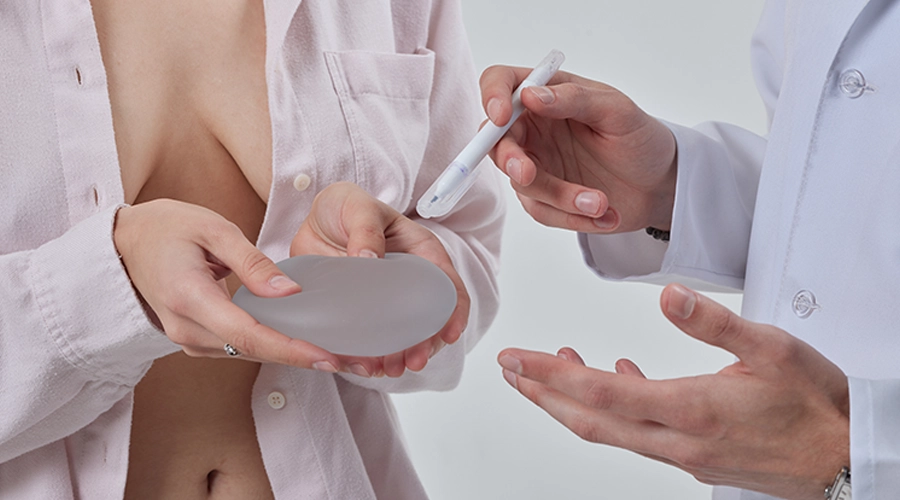
What is breast reconstruction?
Breast reconstruction is the process of reconstructing the breast after it has been lost or deformed due to cancer surgery, trauma, or certain congenital developmental abnormalities. Breast reconstruction aims to restore breast volume and contour using implants or the patient’s own tissues.
The procedure can be performed during the same surgery as a mastectomy or after cancer treatments are completed. The method to be used is determined according to the amount of skin and tissue available, the overall health condition, and the planned oncological treatments.
Reconstruction is not limited solely to creating breast volume. In appropriate cases, the appearance of the nipple and areola can also be corrected in later stages.
However, the reconstructed breast may not have the same tissue characteristics and sensitivity as the natural breast. Therefore, the desired appearance and functional limitations should be evaluated before the procedure.
What are the purposes of breast reconstruction surgery?
Breast reconstruction is performed to recreate breast contour after breast loss or significant deformity. The goal of breast reconstruction is to restore as much volume and shape as possible, reducing the visual difference between the two sides.
After a mastectomy, the complete or significant removal of breast tissue can alter the appearance of the chest wall. Reconstruction can create a new breast contour in this area.
Volume deficiencies and shape irregularities that develop after breast-conserving surgery can also be corrected in some cases using reconstructive methods.
However, the goal of reconstruction is not to cure cancer. Planning cancer treatment and monitoring the disease requires a separate oncological evaluation. The decision for surgery should be made by considering both the individual’s expectations and treatment needs.
Who is a suitable candidate for breast reconstruction surgery?
Individuals who have undergone mastectomy, experienced significant tissue loss after breast-conserving surgery, or have certain developmental breast abnormalities may be evaluated for reconstruction. Suitability for breast reconstruction depends on overall health status and existing tissue characteristics.
The patient’s cancer treatment plan, whether they have previously received radiotherapy, and the quality of the skin on their chest wall are important factors. Previous surgeries and conditions affecting wound healing should also be evaluated.
If reconstruction using the patient’s own tissue is planned, tissues that can be used from areas such as the abdomen, back, or thighs are examined.
Not every patient is suitable for the same method. Some individuals may be considered for implant-based methods, while others may benefit from techniques using their own tissue. Not undergoing reconstruction or using external breast implants are also valid options.
In what situations does breast reconstruction become an option?
Reconstruction may be considered in cases where breast tissue is completely or partially lost, or where significant deformity has occurred. Breast reconstruction is particularly relevant after mastectomy to recreate the breast contour.
Surgeries performed due to breast cancer are among the most common reasons for evaluation. Reconstruction options may also be discussed when a prophylactic mastectomy is planned for some high-risk individuals.
Volume deficiency or asymmetry that develops after breast-conserving surgery may also require repair. Trauma and certain congenital developmental differences are among other causes.
The appropriate method is determined based on the extent of tissue loss and the individual’s health condition. Not every breast loss requires the same reconstruction technique.
How is breast reconstruction planned after mastectomy?
The reconstruction plan after mastectomy is prepared according to the amount of breast tissue to be removed or already removed, and the oncological treatment requirements. Breast reconstruction can be performed simultaneously with the mastectomy or at a later date.
Planning involves evaluating whether the breast skin should be preserved, the condition of the nipple, and the tissues in the chest wall. The need for radiotherapy also plays an important role in choosing the method and timing.
In implant-based reconstruction, direct implant placement or the use of tissue expanders first may be considered. In methods using the patient’s own tissue, suitable donor areas are examined.
The decision should be made after evaluation by breast surgery, plastic surgery, and oncology teams. The priority is the safe continuation of cancer treatment.
Is reconstruction possible after breast-conserving surgery?
Volume deficiency or shape deformity resulting from breast-conserving surgery can be corrected with certain reconstructive methods. In this case, breast reconstruction may aim to reshape the existing tissue rather than recreating the entire breast.
During surgery, reshaping of remaining breast tissue or tissue transfer from suitable areas may be considered. In some individuals, a breast-matching procedure in the opposite breast may also be an option.
However, planning radiotherapy after breast-conserving surgery can affect tissue healing and long-term shape.
Therefore, whether reconstruction will be performed in the same session or later should be determined according to the individual treatment plan. Additional surgery is not necessary for every deformity.
Will sensation return after breast reconstruction?
Partial restoration of sensation in the breast skin and surrounding tissues may be possible after reconstruction. However, there is no guarantee that the level of sensation in the natural breast will be fully restored after breast reconstruction.
During a mastectomy, some sensory nerves extending to the breast tissue and skin may be cut. Therefore, numbness or decreased sensation may occur after surgery.
Nerve regeneration from surrounding tissues may occur over time. However, the degree of sensory recovery depends on the surgical technique used and the individual’s recovery.
Even with reconstructions using the patient’s own tissue, loss of sensation can occur. Even with nerve repair, complete restoration of natural sensation should not be expected.
Can nerve repair be used in breast reconstruction?
In selected patients, nerve repair techniques can be used to support sensation in the reconstructed breast tissue. These procedures performed during breast reconstruction are particularly relevant in some free tissue transfer methods.
In a technique called nerve coaptation, appropriate sensory nerves can be connected to each other using microsurgical methods. The aim is to support sensory development in the newly created tissue.
However, suitable nerve structures may not be available for every patient. Previous surgeries, radiotherapy, and tissue characteristics influence the planning.
Sensory return after nerve repair can take time and results are variable. The application of these techniques does not guarantee the complete restoration of natural breast sensation.
How is breast reconstruction surgery performed?
Surgery can be performed using implants or by transferring the patient’s own tissues to the breast area. The technique to be used during breast reconstruction is determined according to the existing skin, muscle, and fat tissue.
In implant-based methods, silicone implants can be placed directly or, after using a tissue expander, can be replaced with a permanent implant in a later stage.
In autologous reconstruction, tissues taken from areas such as the abdomen, back, or thighs can be used. In microsurgical techniques such as DIEP flap, skin and fat tissue from the abdominal area are transferred to the chest area with re-established vascular connections.
Some patients may require more than one surgical procedure. Nipple and areola reshaping or equalization procedures on the opposite breast can be planned for later stages.
How long does breast reconstruction take?
The duration of the operation depends on the method used, whether a single or bilateral procedure is performed, and the extent of the reconstruction. Implant-based breast reconstruction and microsurgical tissue transfer are not completed in the same amount of time.
Tissue expander placement, direct implant use, or autologous tissue repair involve different surgical stages. In microsurgical techniques, preparing and checking vascular connections requires additional time.
Performing reconstruction in the same session as mastectomy also affects the total surgery time.
Therefore, there is no single timeframe that applies to all patients. The scope of the planned technique and any potential additional procedures should be evaluated before surgery.
Which type of anesthesia is used in breast reconstruction?
Most breast reconstruction surgeries are performed under general anesthesia. However, general anesthesia may be required, particularly for breast reconstruction procedures involving implant placement or tissue transfer, due to the duration and scope of the surgery.
The anesthesia plan is determined based on the patient’s general health condition, comorbidities, and the surgical technique to be used.
For some minor, complementary procedures, different anesthesia methods may be considered. However, general anesthesia is the common approach for extensive reconstructive surgeries.
Pre-operative anesthesia evaluation is important. Medications used, previous anesthesia experiences, and existing health conditions should be considered during this process.
How many days do you stay in the hospital after breast reconstruction surgery?
Hospital stay length depends on the surgical method used and the postoperative recovery status. Implant-based procedures and microsurgical tissue transfers following breast reconstruction may have different follow-up requirements.
In more limited procedures using implants, hospital stays may be shorter. However, with free flap techniques, close monitoring of blood flow to the transferred tissue is necessary.
Pain management, the status of drains, and the patient’s ability to move may influence the decision to discharge.
There is no fixed length of hospital stay for every patient. Hospital monitoring is a crucial part of surgical safety, especially in reconstructions requiring circulation monitoring.
Are drains used after breast reconstruction surgery?
In some reconstructive surgeries, drains may be used to remove blood and fluid that may accumulate in the wound area. The need for drains after breast reconstruction depends on the technique used and the characteristics of the surgical area.
Drainage may be considered in implant-based procedures or surgeries involving extensive tissue separation. In autologous reconstruction, drains may be necessary in both the breast and the tissue harvesting area.
However, drain placement is not necessary for every patient. When to remove the drain is usually determined by the amount of fluid removed and clinical evaluation.
Fluid accumulation can also develop after the drain is removed. Symptoms such as significant swelling, redness, or fever require medical evaluation.
Breast Reconstruction Prices 2026
The cost of reconstruction varies depending on the surgical method used, whether the procedure is unilateral or bilateral, and the necessary surgical stages. Therefore, there is no standard price for breast reconstruction in 2026 that can be applied to all patients.
Frequently Asked Questions
Can breast reconstruction be performed at the same time as a mastectomy?
In suitable patients, reconstruction can be performed in the same operation as mastectomy. Simultaneous breast reconstruction allows for the creation of a new breast contour in the same surgical procedure following the removal of breast tissue.
However, this approach is not suitable for every patient. The decision for simultaneous or delayed reconstruction is made by evaluating the characteristics of the cancer, the need for radiotherapy, the patient’s overall health, and the available tissues.
Does breast reconstruction delay cancer treatment?
The goal of a properly planned reconstruction is to avoid unnecessarily delaying cancer treatment. However, if wound healing problems or other complications develop after breast reconstruction, the timing of additional treatments may be affected.
Therefore, the timing of the surgery should be determined by a joint assessment of the oncology and surgical teams. The priority is the safe and timely continuation of cancer treatment.
Can breast reconstruction be performed on patients who have undergone radiotherapy?
Reconstruction can also be performed on individuals who have received radiotherapy. However, the effects of radiotherapy on the skin and surrounding tissues must be considered when planning breast reconstruction.
Radiotherapy can reduce tissue elasticity and hinder wound healing. In implant-based procedures, the risk of capsule contracture and other complications may increase. In some patients, reconstruction using their own tissue may be considered more suitable.
In breast reconstruction, are implants or the patient’s own tissue more suitable?
The most suitable method varies depending on the individual’s anatomy, previous treatments, and expectations. While implant use in breast reconstruction may require more limited donor area surgery, methods using the patient’s own tissue involve transferring tissue from another part of the body.
Long-term monitoring of implants and the potential need for replacement are important. In autologous reconstruction, donor site issues and more extensive surgical risks must be evaluated.
Is breast reconstruction using the patient’s own tissue permanent?
Successfully transplanted and supplied with blood circulation, living tissue can remain for a long time. Therefore, breast reconstruction using the patient’s own tissue can create breast volume that is not dependent on implant replacement.
However, transplanted tissue can be affected by aging and weight changes. Furthermore, fat necrosis, volume changes, or shape irregularities may develop. Therefore, there is no guarantee that the appearance will remain exactly the same throughout life.
Can abdominal muscles be damaged during DIEP flap surgery?
DIEP flap technique aims to transfer skin and fat tissue from the abdominal area while preserving muscle tissue as much as possible. During breast reconstruction performed with this method, removal of a large portion of the abdominal muscle is generally not necessary.
However, surgical separation of muscle tissue may be necessary to prepare the blood vessels. Therefore, it cannot be guaranteed that complications such as abdominal wall weakness, swelling, or hernia will not occur.
How long does breast reconstruction surgery take?
The duration of the surgery varies depending on the technique used and the scope of the procedure. Implant-based breast reconstruction and microsurgical tissue transfer are not completed in the same amount of time.
Whether the procedure is performed unilaterally or bilaterally, whether the mastectomy is performed in the same session, and any additional shaping requirements can affect the total duration. Therefore, there is no fixed surgery time that applies to everyone.
How many days do patients stay in the hospital after breast reconstruction surgery?
The length of hospital stay depends on the method used and the postoperative follow-up requirements. Hospital stays may differ after implant-based procedures and free flap surgeries following breast reconstruction.
In microsurgical tissue transfer, close monitoring of blood flow to the transferred tissue may be necessary. The decision for discharge should be made after evaluating pain control, wound status, and overall healing.