


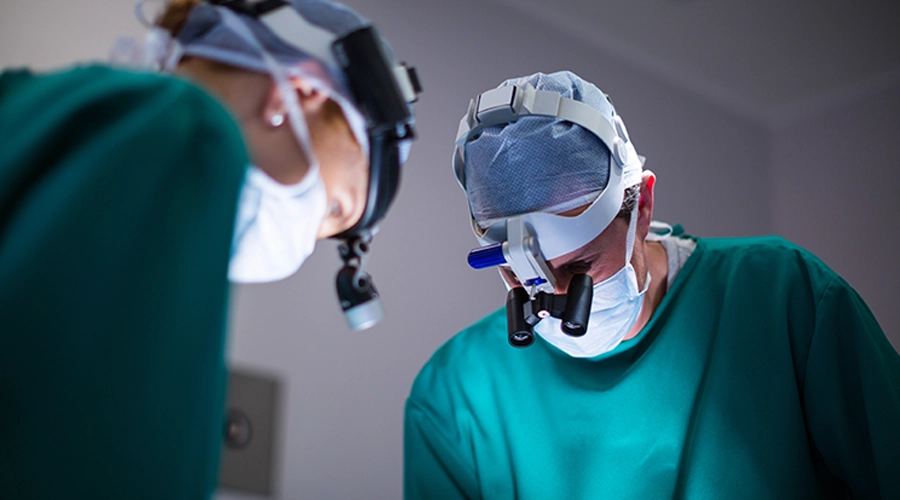
What is microsurgery?
Microsurgery is a surgical technique that allows the repair of very small blood vessels, nerves, and other delicate anatomical structures using surgical microscopes or magnifying optical systems. Microsurgery is particularly used in cases of tissue loss after trauma, in the reattachment of severed limbs, and in complex reconstructive surgeries.
In this method, structures that are difficult to assess in detail with the naked eye are examined under magnification. Delicate repairs are performed with the help of fine surgical instruments and special suture materials.
Microsurgery is not the name of a single surgical procedure; it is a set of techniques used in various surgical fields.
The success of treatment depends on the characteristics of the injury, the viability of the tissues, blood circulation, and the patient’s overall health. Complete functional recovery cannot be guaranteed for every patient.
For what purposes is microsurgery applied?
Microsurgery is used to repair small blood vessels and nerves, reconnect severed tissues, and close extensive tissue losses. It is a crucial method, particularly in surgeries where delicate anatomical structures need to be preserved.
Reconnecting severed blood vessels after trauma can help restore blood flow to the tissues. Nerve repair, in suitable patients, aims to restore sensory and motor functions.
In cases of extensive tissue loss, tissues taken from another part of the body can be transferred to the wound area using microsurgical techniques.
However, microsurgery is not necessary for every injury. Different repair techniques may be preferred in cases where simpler surgical methods are sufficient.
Who is a suitable candidate for microsurgery?
Individuals with injuries requiring repair of small vessels or nerves, or those needing free tissue transfer, may be evaluated for microsurgery. Suitability for microsurgery depends on the type of injury and the individual’s overall health status.
Severed fingers or limbs, serious blood vessel cuts, and some nerve damage can be treated with this method.
Free flap surgeries may also be planned for individuals who experience extensive tissue loss following cancer surgery or trauma.
However, microsurgery is not possible or necessary in every patient. Tissue viability, time elapsed since injury, the condition of blood vessels, and comorbidities must be evaluated.
In which diseases and injuries is microsurgery used?
Microsurgery can be used in the treatment of vascular and nerve injuries, limb amputations, and the repair of complex tissue losses. Microsurgical techniques are utilized in trauma surgery, plastic surgery, and various reconstructive procedures.
Injuries from sharp objects or crushing injuries can disrupt the integrity of blood vessels and nerves. In appropriate cases, these structures can be repaired under a microscope.
Reattaching severed fingers or limbs may also require microsurgery.
Free flap techniques can be used in cases of extensive tissue loss following cancer surgery. Additionally, microsurgical techniques can be employed in some lymphedema surgeries to repair or connect small lymphatic vessels.
How is microsurgery performed?
Microsurgery is performed by examining the structures to be repaired under magnification and precisely joining them together using specialized surgical instruments. Microsurgery may involve the use of a surgical microscope, fine forceps, micro-scissors, and specialized suture materials.
First, the damaged area is assessed, and the blood vessels or nerve endings to be repaired are prepared.
In vascular repair, the goal is to properly connect the nerve endings and restore blood flow. In nerve repair, the nerve endings are brought together in as stress-free a manner as possible.
In free tissue transfer, the blood vessels of the transferred tissue are connected to the blood vessels in the recipient area.
Tissue circulation and healing are carefully monitored after the procedure. The technique used varies depending on the type of surgery.
Why is a surgical microscope used in microsurgery?
Surgical microscopes allow for detailed viewing of very small anatomical structures and enable precise surgical procedures. Magnification is particularly important during microsurgery, especially in the repair of fine blood vessels and nerves.
The walls of small blood vessels and the outer sheaths of nerves may not be able to be evaluated in sufficient detail with the naked eye.
The microscope provides the surgeon with a magnified and illuminated image. This makes it easier to place the sutures correctly and protect the surrounding tissues.
However, the use of a microscope alone does not guarantee a successful outcome. Surgical technique, tissue viability, and postoperative follow-up also affect the treatment result.
What surgical instruments are used in microsurgery?
Microsurgery utilizes surgical microscopes, micro forceps, fine scissors, vascular clamps, and specialized suture materials. In microsurgical procedures, it is crucial that the instruments are suitable for small anatomical structures.
Micro forceps allow for the precise handling of vascular and nerve tissues. Fine scissors are used for the controlled preparation of tissues.
In vascular repair, temporary micro-clamps can be used to control blood flow.
Very fine suture materials are used to connect blood vessels or nerve endings. In some procedures, vascular ligation devices may also be used.
The instruments to be used are determined according to the diameter and location of the structure to be repaired, and the surgical method.
Which tissues can be repaired with microsurgery?
Microsurgery allows for the repair of small blood vessels, nerves, and some lymphatic vessels; it also enables the transport of different tissue types by creating vascular connections. Microsurgery is particularly used in reconstructive procedures where restoring blood circulation is necessary.
Tissue fragments containing skin, fat, muscle, and bone can be transferred to another area using free flap techniques.
In cases of nerve injury, direct repair or nerve grafting can be performed when appropriate.
In tendon repairs, microsurgical vascular ligation techniques are usually not required. However, magnification can be used in very small or complex anatomical structures.
Which tissues can be repaired depends on the extent of the injury and the current tissue viability.
How is blood vessel repair performed with microsurgery?
Vascular repair is performed by preparing the damaged vessel ends and joining them together using appropriate techniques. During microsurgery, the goal is to accurately match the inner surfaces of the small vessels and preserve blood flow.
First, the damaged blood vessel area is evaluated. If necessary, the non-viable ends of the blood vessel are removed.
If the ends of the vessels can be properly joined, a connection called anastomosis is created with fine sutures. If the gap is too large, a vascular graft may be necessary.
Blood flow is monitored after the repair. Blood clots forming in the vessel or the connection becoming blocked are significant complications.
Therefore, close monitoring of circulation is necessary, especially after free flap and limb reconstruction surgeries.
How is nerve repair performed with microsurgery?
Nerve repair is achieved by properly preparing the damaged nerve endings and connecting them in as tension-free a way as possible. During microsurgery, the outer sheath of the nerve and related anatomical structures are evaluated under magnification.
If there is no space between the nerve endings, direct repair can be performed. In cases of more extensive nerve loss, nerve grafting or different reconstructive methods may be necessary for suitable patients.
It takes time for nerve fibers to regrow after surgery. This process depends on the level of injury and the distance of the nerve from the target tissues.
Nerve repair does not always provide complete sensory or motor recovery. Rehabilitation and regular follow-up can affect the results.
Is tendon repair possible with microsurgery?
Tendon repair can be performed surgically, and magnifying optical systems may be used in some delicate repairs. However, microsurgery is not always a necessary part of tendon repair.
Tendons are structures that transmit movement generated by muscles to bones. If they are cut or torn, loss of movement may occur.
During repair, the tendon ends are joined together using appropriate suturing techniques. Depending on the type of injury, repair of surrounding tissues may also be necessary.
Postoperative rehabilitation is particularly important. A balance must be struck between tendon preservation and controlled movement.
Improper movements can lead to re-tear, while prolonged immobility can cause adhesions and stiffness.
How is tissue loss repaired with microsurgery?
Extensive tissue loss can be repaired by transferring tissues taken from another part of the body, recreating vascular connections along the way. Microsurgery helps ensure blood circulation to the transferred tissue during this procedure.
Free flap techniques can be used, especially in wounds where exposed bone, tendon, or important blood vessels are present.
Skin, fat tissue, muscle, or bone tissue can be selected according to need. The blood vessels of the transplanted tissue are connected to the blood vessels in the recipient area.
However, microsurgery is not necessary for every tissue loss. For small wounds, direct closure, skin grafting, or a local flap may suffice.
The choice of method depends on the characteristics of the wound and the patient’s overall health condition.
What is Microsurgical Free Tissue Transfer?
Free tissue transfer is a procedure where tissue is taken from one area of the body, its vascular connections are severed, and it is transferred to another area where new vascular connections are created. Microsurgery allows for the precise creation of these vascular connections.
In this method, called a free flap, tissues containing skin, fat tissue, muscle, or bone can be used.
For example, in a large traumatic wound, tissue can be transferred from another area to cover exposed bone or tendon.
After surgery, blood flow to the flap is closely monitored. If a blood clot develops, the viability of the transplanted tissue may be jeopardized.
In some cases, emergency surgery may be required to restore circulation.
Microsurgery Prices 2026
The cost of surgery varies depending on the type of procedure, the extent of the injury, and the surgical requirements. Therefore, there is no standard price for microsurgery in 2026 that can be applied to all patients.
Frequently Asked Questions
How long does microsurgery take?
The duration of a microsurgical procedure depends on the procedure to be performed and the number of structures to be repaired. Within the scope of microsurgery, a minor nerve repair and a free flap transfer cannot be completed in the same amount of time.
Reattaching severed limbs or repairing multiple blood vessels and nerves can take longer. Therefore, there is no fixed surgery duration that applies to all patients.
Is microsurgery a difficult operation?
Microsurgery requires advanced surgical skills and specialized equipment because it involves the precise repair of small anatomical structures. Accurately connecting blood vessels or nerve endings is crucial during microsurgery.
The complexity of the surgery depends on the type of injury and the extent of tissue damage. Crushing injuries and extensive tissue loss, in particular, can be more complex.
In what situations is microsurgery necessary?
Microsurgery can be used in cases requiring the repair of small vessels or nerves, and the transfer of free tissue. Microsurgery is particularly important in cases such as reattaching severed fingers, repairing vascular injuries, and complex reconstructive surgeries.
However, not every wound or tendon injury requires microsurgery. The appropriate method is determined according to the characteristics of the damage and the existing anatomical conditions.
How many hours does it take to reattach a severed finger?
Microsurgical evaluation for reattaching a severed finger should be performed as soon as possible. The success of microsurgery depends on the type of injury, the preservation conditions of the tissue, and the duration of the blood supply interruption.
Because fingers have less muscle tissue, they can withstand anemia for longer than some other limbs. However, there is no single time limit that can be considered safe.
The severed part should be wrapped in a clean, slightly damp cloth and placed in a waterproof bag; the bag should then be placed in another container filled with ice water. The part should not be directly exposed to ice or frozen. Emergency medical services should be sought without delay.
Can a severed finger always be reattached?
Reattaching every severed finger is not possible or feasible. The decision regarding microsurgery is made by evaluating the level of injury, the condition of the blood vessels, and the viability of the tissue.
The chances of reattachment may be better in sharp wounds than in some crush or amputation injuries. However, results vary from person to person.
Furthermore, reattaching the finger may not always be the most functionally optimal option.
Can a severed limb regain its former function through microsurgery?
After reattaching severed limbs, a certain degree of sensory and motor function can be regained. However, microsurgery cannot guarantee a complete return to the limb’s pre-injury function.
The outcome depends on the degree of nerve, muscle, tendon, and bone damage. The level of injury and postoperative rehabilitation are also important.
Some people may experience permanent mobility limitations, sensory loss, or sensitivity to cold.
Can a nerve injury heal completely with microsurgery?
Severed nerves can be repaired using microsurgical techniques in suitable cases, but complete recovery is not always possible. During microsurgery, the goal is to properly reconnect the nerve endings, creating an environment for the regrowth of nerve fibers.
Recovery depends on the level of injury, the amount of nerve damage, and the person’s age. Permanent sensory or motor loss may occur, particularly in long-distance nerve injuries.
When does sensation return after nerve repair?
Sensory recovery after nerve repair usually develops within months, but it may take longer in some patients. After the nerve endings are connected using microsurgery, the nerve fibers need to regrow to the target tissues.
This process depends on the level of injury and the distance of the nerve from the affected area. Sensory recovery does not occur at the same rate in every patient, and a complete return of sensation cannot be guaranteed.
Will muscles function again after nerve surgery?
Muscle movement may partially or significantly return after nerve repair, but the outcome depends on the characteristics of the injury. Microsurgical repair of the motor nerve aims to restore nerve fibers to the muscles.
Muscles that have been deprived of nerve connections for a long time may develop irreversible changes. Therefore, the level of injury, the time elapsed, and rehabilitation all affect functional outcomes.