


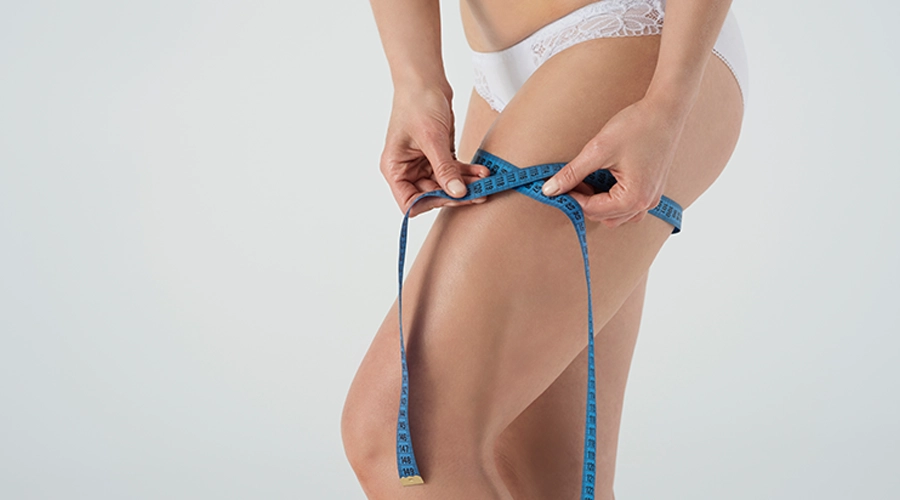
What is a thigh lift?
This is a surgical procedure performed to remove excess skin from the thigh area and reshape the leg contour. Thigh lifts aim to reduce skin sagging, especially that caused by significant weight loss or aging.
During the surgery, loose skin on the inner or, in certain cases, outer thigh is surgically removed. In necessary cases, liposuction may also be performed to reshape the subcutaneous fat tissue.
Surgical technique varies depending on the location and extent of the sagging. For limited excess skin, incisions near the groin area may suffice, while for extensive sagging, incisions extending along the thigh may be necessary.
This procedure is not a weight loss method. Furthermore, permanent scars will form after the surgery. Therefore, the desired contour change and the location of the scars should be evaluated together.
Why is a thigh lift performed?
Thigh lift surgery is performed to reduce sagging skin in the thigh area, smooth skin folds, and improve leg contour. It may be considered, especially after significant weight loss, when the skin hasn’t fully recovered.
Excess skin can cause friction in the inner thigh areas while walking. Some people may experience irritation, chafing, and discomfort during daily activities.
Age-related loss of skin elasticity can also alter the appearance of the thighs. While exercise strengthens muscles, it doesn’t eliminate noticeable excess skin.
During surgery, excess skin is removed to achieve a more balanced contour. However, the same degree of thinning or a completely smooth skin appearance cannot be guaranteed for everyone.
Who is a suitable candidate for thigh lift surgery?
Individuals with significant excess skin in the thigh area, who are in good general health and have realistic expectations for surgery, may be evaluated for a thigh lift. Suitability for a thigh lift is not determined solely by leg circumference.
The degree of skin sagging, skin elasticity, and the distribution of fat tissue are important factors. Individuals whose thigh skin has become noticeably loose, especially after significant weight loss, may be suitable candidates.
Relatively stable weight makes it easier to assess long-term contour changes. Ongoing large weight fluctuations can affect surgical outcomes.
Smoking, diabetes, circulatory problems, and blood clot risks should be evaluated before surgery. Permanent scarring and mobility limitations during the recovery period should also be considered in the decision-making process.
What causes sagging in the thigh area?
Thigh sagging can develop as a result of decreased skin elasticity and changes in the volume of the underlying tissues. In individuals with significant excess skin, a Thigh Lift may be considered to correct these changes.
With age, changes occur in the collagen and elastin structure of the skin. This can reduce skin firmness.
After significant weight loss, skin that was previously stretched may not be able to adequately accommodate the new volume. Genetic factors and past weight changes also affect the degree of sagging.
Changes in muscle volume can affect the appearance of the legs, but muscle weakness isn’t the primary cause of every sagging skin condition. Especially if there’s excess skin, exercise alone isn’t expected to completely resolve the issue.
Why does thigh skin become loose after weight loss?
After significant weight loss, the thigh skin may not be able to adequately adapt to the reduced fat volume, leading to sagging. In this case, a thigh lift may be considered to remove the excess skin.
During weight gain, the skin and subcutaneous tissues expand. Although fat volume decreases with weight loss, the skin may not always return to its previous firmness.
Skin folds can form along the inner thighs, especially in people who have lost a significant amount of weight. These folds can cause friction and skin irritation when walking.
It is important that weight is relatively stable before surgical planning. Ongoing weight loss or weight regain can alter leg contour after surgery.
How does aging affect skin firmness in the thigh area?
Aging can reduce skin elasticity, contributing to looseness and sagging in the thigh area. For individuals who develop significant excess skin, a thigh lift may be a surgical correction option.
Over time, changes occur in the structure of collagen and elastin fibers. This can affect the skin’s resistance to stretching and its ability to recover.
Age-related changes in fat distribution and muscle volume can also alter the appearance of the thighs.
While non-surgical methods can be considered for mild laxity, their ability to remove significant excess skin is limited. In more advanced cases of sagging, surgical skin removal may be necessary.
Which areas does thigh lift target?
Surgery most commonly targets sagging skin on the inner thigh. Thigh lift surgery can be performed specifically to reduce inner thigh laxity extending from the groin area towards the knee.
In some individuals, excess skin is limited to the upper inner thigh. In others, the sagging can extend to the lower parts of the thigh.
Skin laxity on the outer thighs and sides of the buttocks can also be considered within the scope of some body contouring procedures. However, different incision locations and surgical techniques may be required for these areas.
The surgical plan is determined based on the location and extent of the sagging. The goal is to safely remove excess skin while preserving leg movement.
How is inner thigh sagging evaluated?
Inner thigh sagging is assessed by examining the amount and location of excess skin and the distribution of fatty tissue. Skin laxity, particularly extending from the groin area towards the knee, is important in planning a thigh lift.
During the examination, the person is assessed while standing. The changes in skin folds during walking and movement can also be considered.
Skin elasticity, existing stretch marks, and asymmetry between the two legs are also examined. If fat accumulation is significant, the need for liposuction may be assessed.
Surgical technique is not determined solely by the appearance of the sagging. Safe closure of the incision line, preservation of lymphatic structures, and minimizing disruption of leg movement are also important.
Can outer thigh sagging be corrected with thigh lift?
Skin sagging in the outer thigh area can be corrected with some surgical body shaping methods. However, when it comes to thigh lifts, the most commonly applied techniques target the inner thigh area.
Individuals with significant laxity in the outer thigh may consider different methods such as lateral thigh lift or lower body lift.
In these procedures, incision placement and tissue arrangement may differ from inner thigh lifts. Especially after significant weight loss, sagging of the hips and outer thighs can occur together.
Therefore, the treatment of lateral thigh sagging should be planned according to individual anatomical characteristics. The same surgical technique is not suitable for every patient.
How is skin quality assessed before a thigh lift?
Skin quality, elasticity, thickness, and the degree of existing sagging are evaluated. In thigh lift planning, it is important to consider how the skin will adapt to the new contour after the tissue is removed.
During the examination, skin folds, stretch marks, and existing scars are taken into consideration. Skin elasticity may be significantly reduced, especially in individuals who have experienced significant weight loss.
Skin quality helps plan the length of the incision and the amount of tissue to be removed. However, it is not possible to predict with certainty how much the skin will recover after surgery.
Health issues that may affect wound healing should also be evaluated. The goal is not just to remove excess skin, but to maintain safe healing conditions.
Why is fat distribution assessed before a thigh lift?
Fat distribution is assessed to determine how much of the thigh width is due to fat tissue and how much is excess skin. In thigh lift planning, this distinction helps in selecting the appropriate surgical technique.
Some individuals may have significant fat accumulation but sufficient skin elasticity. In such cases, liposuction may be considered as an alternative option.
In other individuals, even though the amount of fat has decreased, significant skin sagging persists. In this case, simply removing the fat may make the sagging even more visible.
In surgical planning, the distribution of fat tissue, skin quality, and circulatory characteristics should be considered together. It is important to avoid removing excessive fat.
How to Shape Leg Contour with Thigh Lift?
Leg contours can be reshaped by removing excess skin in the thigh area and, if necessary, reshaping fat tissue. Thigh lift surgery is particularly effective in reducing sagging in the inner thighs.
During surgery, excess skin is removed in a controlled manner. The goal is for the remaining tissues to adapt to their new location.
In some patients, liposuction can reduce fat deposits in specific areas. However, this procedure is not necessary for every patient.
The final appearance of the leg contour is also influenced by bone structure, muscle volume, and fat distribution. Therefore, it is not possible to create the same leg shape for everyone.
How is excess skin removed with a thigh lift?
Excess skin is removed through surgical incisions planned according to the location of the sagging. During a thigh lift, the length and location of the incision depend on the amount of excess skin.
For limited upper inner thigh sagging, an incision near the groin crease may be used. For more extensive sagging, a vertical incision extending along the inner thigh may be necessary.
During surgery, tissues are carefully rearranged and incision lines are closed. Avoiding excessive tension is important for wound healing.
Permanent scars form after surgery. The length and visibility of the scars vary depending on the technique used and the individual’s wound healing process.
Can Thigh Lifts Make Legs Look Slimmer?
A reduction in thigh circumference can be achieved by removing excess skin and an appropriate amount of subcutaneous tissue. However, the same degree of slimming is not expected for everyone after a thigh lift.
Changes in leg circumference depend on the amount of excess skin, fat, and the surgical technique used.
In some patients, liposuction can be combined with more extensive contouring. However, muscle volume and bone structure are not altered by surgery.
Postoperative edema can affect circumference measurements in the early stages. More meaningful assessment requires further healing progress.
What are the different types of thigh stretches?
Thigh lift surgeries can be performed using different techniques depending on the location and extent of skin sagging. Thigh lift methods include limited inner thigh lift, vertical inner thigh lift, and approaches targeting the outer thigh area.
In limited inner thigh lifts, the incision is usually placed near the groin area. This method may be considered for individuals with limited excess skin on the upper inner thigh.
In vertical inner thigh lifts, the incision can extend along the inner surface of the thigh. It is particularly suitable for individuals with larger areas of excess skin, especially after significant weight loss.
For sagging outer thighs, procedures such as lateral thigh lift or lower body lift may be considered. The appropriate technique is determined according to the existing anatomical characteristics.
Thigh Lift Prices 2026
The cost of surgery varies depending on the degree of excess skin in the thigh area, the surgical technique used, and any additional procedures required. Therefore, there is no standard price for thigh lift surgery in 2026 that can be applied to all patients.
Frequently Asked Questions
How long does a thigh lift surgery take?
The duration of the surgery depends on the amount of excess skin and the surgical technique used. Correction of extensive sagging with limited skin removal during a thigh lift is not completed in the same amount of time.
Adding liposuction or reshaping the outer thigh area can increase the duration. Therefore, there is no fixed surgery time that applies to all patients.
Is thigh lift surgery painful?
Pain, tightness, and discomfort during movement may occur in the thigh area after surgery. The degree of pain after a thigh lift depends on the scope of the surgery and the individual’s recovery.
Pain can usually be controlled with appropriate medication and will decrease over time. However, if the pain worsens, or if sudden swelling or noticeable redness develops, a medical evaluation is necessary.
How many days of rest are needed after a thigh stretch?
The recovery period varies depending on the scope of the surgery, the individual’s daily activities, and their healing status. In the first few days after a thigh lift, it may be necessary to avoid strenuous activities that strain the legs.
Light walks are generally an important part of the recovery process. However, longer walks, strenuous exercises, and intense physical activities may require waiting longer.
When can I walk normally after a thigh stretch?
Walking patterns may gradually return to normal depending on the extent of the surgery and the healing of the incision lines. In the first few days after a thigh lift, walking with short, controlled steps may be more comfortable due to the tension.
However, complete immobility is not advisable. Safe movement in the early stages is important for circulation. The return to normal walking should be planned according to the recommendations of the surgical team.
When can I return to work after a thigh lift?
The return-to-work time depends on the physical demands of the job and post-operative recovery. Return to desk work after a thigh lift may be sooner than in jobs requiring prolonged standing or heavy physical exertion.
Movements that create tension at the incision lines can affect healing. Therefore, there is no single return-to-work time that can be applied to everyone.
How many weeks should a compression garment be worn after a thigh lift?
The duration of supportive garment use depends on the scope of the surgery and the surgical team’s follow-up plan. After a thigh lift, compression garments may be recommended for some patients to control swelling and provide tissue support.
However, the same duration or pressure level is not suitable for every patient. Garments that are too tight can cause skin irritation and circulation problems. The duration of use should be determined according to individual recovery.
When can I exercise after a thigh stretch?
Return to sport should be planned according to the type of exercise and the state of tissue healing. While light walking is generally allowed sooner after a thigh stretch, it may be necessary to wait for running, weight training, and intense leg exercises.
Movements that stretch the inner thigh area in particular can put stress on the incision lines. Activity level should be increased gradually according to the recommendations of the surgical team.
Is it difficult to sit after a thigh stretch?
After surgery, individuals with incisions near the groin area may experience tightness and discomfort while sitting. The degree of this discomfort after a thigh lift depends on the location of the incision and the amount of skin removed.
Sitting and standing movements can initially be done with more control. However, if symptoms such as severe pain or wound dehiscence develop, a medical evaluation is necessary.