


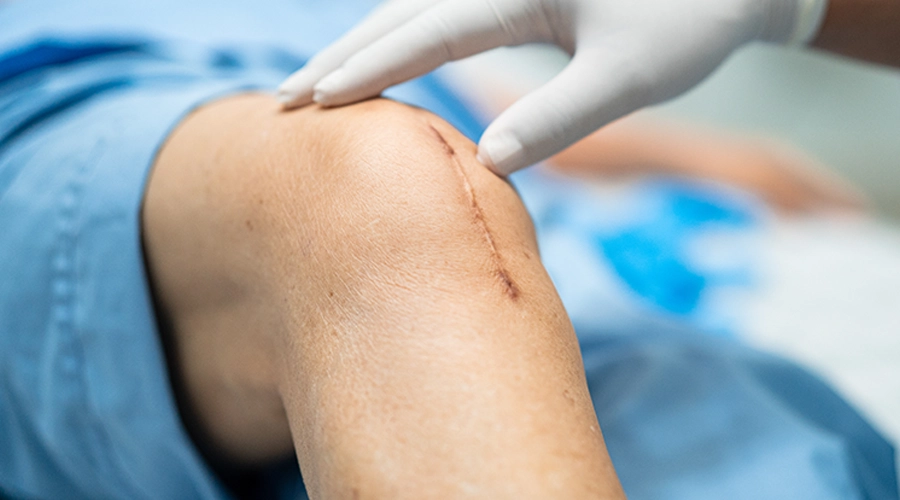
What is Wound and Tissue Repair?
Wound and tissue repair is a treatment process aimed at healing damaged tissues and restoring tissue integrity, whether caused by injury, surgery, infection, or circulatory disorders. It encompasses various approaches, from simple dressing applications to advanced reconstructive surgical techniques.
Wounds can affect only the skin, or they can extend to deeper structures such as subcutaneous fat tissue, muscle, tendons, blood vessels, and bone. The treatment method is determined according to the depth of the damage, the location of the wound, and the person’s overall health condition.
Some wounds can close spontaneously with proper care. However, in cases of extensive or complex tissue loss, surgical methods such as sutures, skin grafting, or flaps may be necessary.
The primary goal of treatment is to ensure safe healing, reduce the risk of infection, and preserve the function of the affected area as much as possible.
For what purposes is wound and tissue repair performed?
Wound and tissue repair is performed to ensure wound closure, reduce the risk of infection, repair lost tissues, and preserve the function of the affected area. It is particularly important in wounds that are slow to heal spontaneously or that affect significant anatomical structures.
Open wounds can easily allow microorganisms to reach tissues. Therefore, proper cleaning, dressing, and, if necessary, surgical intervention are important.
In deep injuries, it may be necessary to protect and repair structures such as tendons, nerves, or blood vessels. In chronic wounds, simply covering the surface of the wound may not be sufficient.
During treatment, the underlying problem that caused the wound to form should also be evaluated. Especially in conditions such as diabetes and circulatory disorders, controlling the underlying cause is crucial for healing.
Who is a suitable candidate for Wound and Tissue Repair?
Individuals with acute injuries, chronic wounds, or significant tissue loss may be evaluated for appropriate treatment options. The approach to wound and tissue repair depends on the characteristics of the wound and the individual’s overall health status.
Cuts, traumatic injuries, post-surgical healing problems, pressure ulcers, and diabetic foot ulcers can all be considered within this scope.
However, not every wound requires surgery. Small and superficial wounds can heal with proper care, while larger or deeper wounds may require more extensive treatment.
Diabetes, smoking, malnutrition, and vascular diseases can affect healing. Therefore, the treatment plan should be based not only on the appearance of the wound but also on individual risk factors.
How does wound healing occur?
Wound healing occurs when the body clears away damaged tissue, creates new tissue, and strengthens the repaired area over time. Blood circulation, the immune system, and cellular regeneration all work together in the wound and tissue repair process.
Immediately after an injury, clotting mechanisms are activated to stop the bleeding. Then, immune cells help to clear the damaged tissue.
In the next stage, new blood vessels and connective tissue form. Skin cells begin to close the wound surface.
During the final stages of healing, the newly formed tissue reorganizes, and the scar matures over time. However, the repaired skin does not always fully regain its structural integrity as it was before the injury.
What are the stages of wound healing?
Wound healing generally occurs in four main phases: hemostasis, inflammation, proliferation, and remodeling. During wound and tissue repair, these phases follow each other but may partially overlap.
During the hemostasis phase, bleeding is controlled and a clot forms. During the inflammation phase, immune cells help clear damaged tissues.
During the proliferation phase, new blood vessels, granulation tissue, and skin cells are formed. The wound surface gradually closes.
During the remodeling phase, collagen fibers are rearranged and the scar matures. This process can continue for months. Infection, poor blood circulation, or nutritional problems can delay the healing phases.
What is tissue loss?
Tissue loss is the loss of part of the skin or deeper anatomical structures as a result of injury or disease. In wound and tissue repair planning, the type and amount of missing tissue are important in determining the treatment method.
Tissue loss may be limited to the skin’s surface. In more severe cases, structures such as fat tissue, muscle, tendons, nerves, or bone may also be affected.
Tissue loss can occur after trauma, burns, infections, or surgical procedures. In some chronic wounds, prolonged circulatory problems can lead to tissue loss of viability.
While minor skin loss can heal with proper wound care, extensive loss may require reconstructive methods such as skin grafting or flaps.
What are the causes of tissue loss?
Tissue loss can occur as a result of trauma, burns, infection, circulatory disorders, or surgical procedures. In wound and tissue repair planning, determining the cause of the loss helps in selecting the appropriate treatment method.
Traffic accidents, stab wounds, and crush injuries can directly cause tissue damage. Burns, on the other hand, can be caused by heat, chemicals, or electricity.
Diabetes and vascular diseases can contribute to wound development by preventing adequate oxygen delivery to tissues. Prolonged pressure can also cause tissue damage, especially in individuals with limited mobility.
Some infections can lead to rapidly progressing tissue loss. Therefore, it is important not only to close the wound but also to treat the underlying cause.
What is the difference between acute and chronic wounds?
Acute wounds typically occur after a sudden injury or surgical procedure, while chronic wounds are those that fail to complete the expected healing process. The approach to wound and tissue repair may differ for these two types of wounds.
Cuts, scrapes, and surgical incisions are examples of acute wounds. Under appropriate conditions, these wounds follow normal healing stages.
Chronic wounds can develop due to conditions such as diabetes, vascular diseases, or prolonged pressure. Recurrent deterioration may occur during the healing process.
The definition of a chronic wound is not based solely on the number of days that have passed. The absence of wound progression and underlying healing barriers should be considered together.
How is the depth of a wound assessed?
The depth of the wound is assessed by examining which layers of the skin and deeper anatomical structures have been damaged. In wound and tissue repair planning, this information helps in selecting the appropriate treatment method.
Superficial wounds may only affect the upper layers of skin. Deeper wounds may expose fat tissue, muscle, tendons, or bone.
During the examination, the wound base, surrounding tissues, and tissue viability are assessed. Imaging methods may be used if necessary.
In penetrating injuries in particular, significant damage may be hidden beneath an opening that appears small from the outside. Therefore, evaluating a wound based solely on its surface appearance is insufficient.
How does wound size affect the treatment plan?
Wound size is one of the important factors affecting the healing time and the treatment methods that can be applied. In wound and tissue repair planning, the length, width, and depth of the wound are evaluated together.
Small, superficial wounds can heal spontaneously with proper care. Larger wounds may require procedures such as sutures, skin grafting, or flaps.
However, wound size alone does not determine treatment. A small but deep wound may involve significant damage to blood vessels, nerves, or tendons.
The location of the wound, the status of infection, and blood circulation are also important factors. Therefore, the treatment plan should be prepared by evaluating all these factors together.
Why is the location of the wound important?
The location of the wound directly affects healing conditions and potential functional losses. In wound and tissue repair planning, the mobility of the anatomical region, blood circulation, and important surrounding structures are evaluated.
In facial injuries, the function of structures such as the eyelids, lips, and nose must be preserved. In hand injuries, tendon and nerve damage can lead to loss of movement and sensation.
In foot and leg wounds, circulatory problems can delay healing. In wounds near joints, the tension created during movement is also important.
Therefore, wounds of the same size may require different treatment methods in different areas. Functional needs should be prioritized in the repair plan.
How is the viability of the tissue surrounding a wound assessed?
Tissue viability is assessed by examining blood circulation around the wound and the physical properties of the tissues. Identifying non-viable tissues prior to wound and tissue repair is crucial for safe healing.
During the examination, findings such as tissue color, temperature, bleeding characteristics, and capillary refill can be evaluated.
Individuals with vascular disease or significant trauma may require Doppler ultrasound and other vascular imaging techniques.
Degenerate tissue can increase the risk of infection and prevent wound healing. Therefore, some patients undergo a surgical debridement procedure to remove the dead tissue. However, the decision to debride in some dry wounds with inadequate circulation requires special attention.
Why is blood circulation important in wound and tissue repair?
Blood circulation plays a fundamental role in wound healing by transporting oxygen and nutrients to the healing tissues. Insufficient blood supply during the wound and tissue repair process can hinder new tissue formation and the fight against infection.
In individuals with diabetes and peripheral artery disease in particular, the amount of blood reaching the wound site may be reduced.
In wounds with poor circulation, simply applying a dressing may not be sufficient. If necessary, a vascular assessment and treatments to improve circulation may be planned.
In surgical procedures such as skin grafting and flaps, tissue blood supply is also crucial. Tissue loss can occur in repairs performed without ensuring adequate blood circulation.
Wound and Tissue Repair Prices 2026
Treatment costs vary depending on the size and depth of the wound, its location, and the method used. Therefore, there is no standard price for Wound and Tissue Repair in 2026 that can be applied to all patients.
Frequently Asked Questions
How long does it take for an open wound to heal?
The healing time of an open wound depends on its size, depth, and the individual’s overall health. During the wound and tissue repair process, small, superficial wounds may close within a few days or weeks, while deeper wounds may take longer to heal.
Conditions such as infection, diabetes, or circulatory disorders can delay healing. Therefore, there is no fixed healing time that applies to all wounds.
How long does it take for a deep wound to heal?
Deep wounds can take weeks or months to heal, depending on the affected tissues and the treatment applied. Involvement of structures such as muscles, tendons, or bones during wound and tissue repair can prolong the healing process.
Some wounds may require surgical closure or tissue transfer. Furthermore, the closure of the wound surface does not necessarily mean that the underlying tissues have fully healed.
How can you tell if a wound needs stitches?
The need for sutures is determined by evaluating the depth of the wound, the openness of the edges, its location, and the characteristics of the injury. Sutures may be necessary, especially in cases of wide-edged or deep cuts, as part of Wound and Tissue Repair.
However, immediate closure may not be appropriate for dirty, infected, or certain bite wounds. Wounds with uncontrollable bleeding, loss of sensation, or restricted movement should be evaluated without delay.
Why does a wound take so long to heal?
Wound healing can be delayed due to infection, poor blood circulation, diabetes, smoking, or nutritional deficiencies. Identifying these factors is important in wound and tissue repair planning.
Constant pressure on a wound or improper care can also hinder healing. In wounds that don’t close for a long time, the underlying cause should be investigated instead of simply changing the dressing.
How can you tell if a wound is infected?
Infected wounds may show increased redness, warmth, swelling, pain, and purulent discharge. Evaluating these signs is important during wound and tissue repair.
Fever, worsening general condition, or a rapidly spreading rash may be signs of a more serious infection. However, symptoms may be milder in people with diabetes or immune system problems. Suspicious sores require medical evaluation.
What happens if the dead tissue in the wound is not removed?
Deviant tissue can delay wound healing and facilitate the development of infection. During wound and tissue repair, a procedure called debridement, which involves removing dead tissue, is performed when necessary.
However, immediate removal is not appropriate for every appearance of necrotic tissue. In some wounds, particularly those with poor blood circulation, dryness, and stability, a vascular assessment may be necessary first. Therefore, the decision regarding the procedure should be made based on the characteristics of the wound.
Should the wound be left open or closed?
Whether a wound is closed or left open depends on the type of injury and the risk of infection. During wound and tissue repair, suitable wounds can be closed with sutures, while delayed closure may be preferred for some soiled or infected wounds.
Open wounds are usually protected with appropriate dressings. Allowing the wound to dry out or exposing it to air continuously does not always speed up healing.
Can chronic wounds heal completely?
Chronic wounds can heal completely with appropriate treatment, but the same outcome cannot be guaranteed for every patient. Controlling factors such as diabetes, circulatory disorders, and chronic pressure is particularly important in the wound and tissue repair process.
Some chronic wounds may require long-term care or surgical intervention. Furthermore, even after the wound closes, there is a risk of it reopening if the underlying problem persists.
Why does diabetes delay wound healing?
Diabetes can delay wound healing by affecting blood circulation, immune response, and nerve function. Blood sugar control and assessment of foot circulation are particularly important during wound and tissue repair.
People with sensory loss may not notice minor injuries. They may also be at increased risk of infection. Therefore, non-healing wounds in people with diabetes should be evaluated early.
How often should a wound dressing be changed?
The frequency of dressing changes is determined by the type of wound, the amount of discharge, and the dressing material used. During wound and tissue repair, some wounds may require daily dressing changes, while modern wound dressings can remain in place for longer periods.
However, there is no fixed dressing interval that applies to all wounds. Earlier evaluation may be necessary if the dressing becomes soiled, leaks, or shows signs of infection.